

 Facebook
 X
X
 Pinterest
 Copy Link
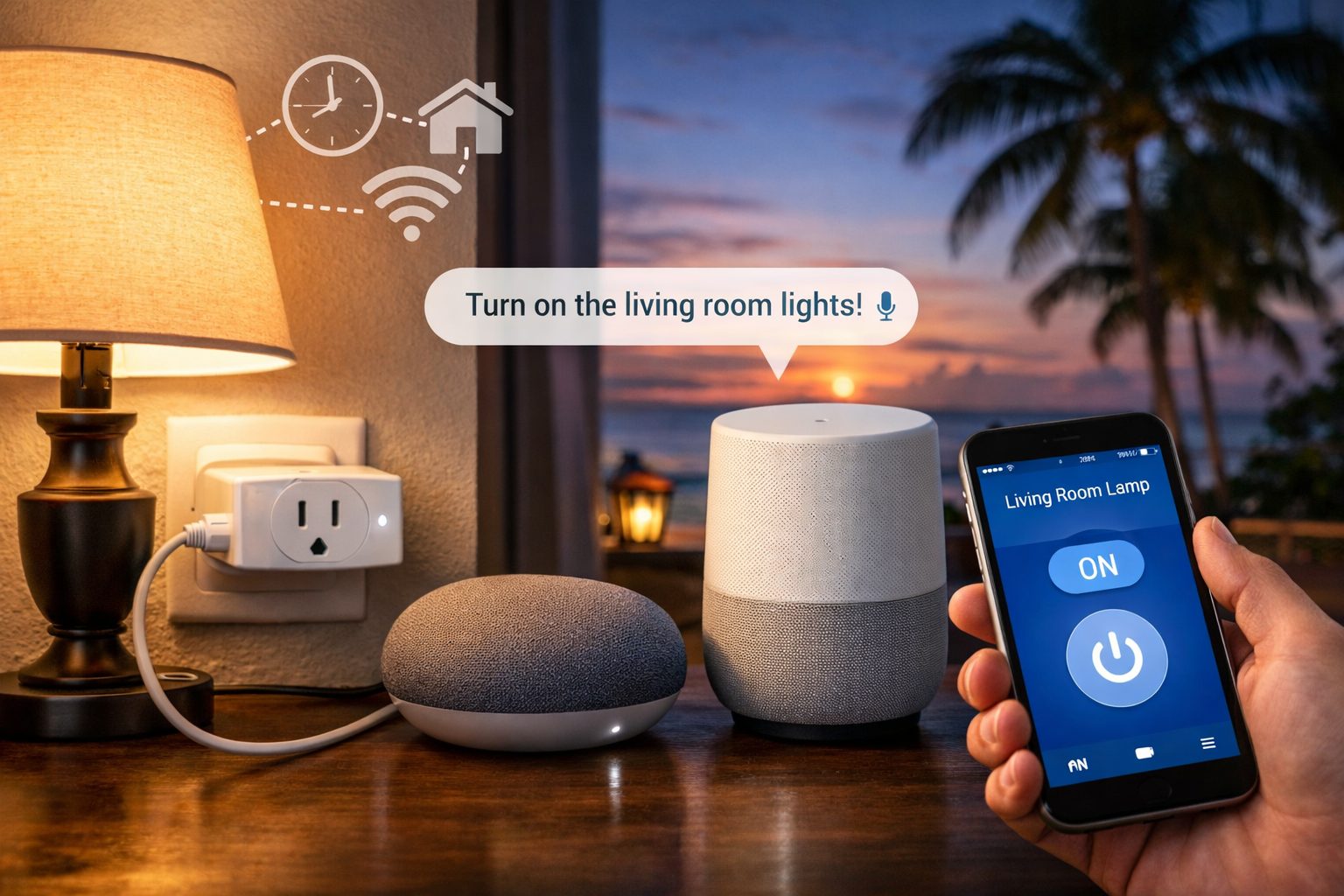
If you’ve ever wished your home could think for itself—turning lights on at dusk, off at bedtime, and maybe even making it look like you’re home when you’re not—you’re not alone.
Welcome to the world of home automation.
Like many homeowners, I’ve dipped my toes into smart tech. In my case, it started simple: smart plugs controlling most of our lighting. And while they’ve been a great addition, they’re not perfect.
Let’s talk about the good, the not-so-good, and what you should know before setting up your own smart home.
The Bright Side: Why Smart Plugs Are So Popular
1. Set It and Forget It
One of the biggest perks is scheduling.
Our lights turn on and off automatically. No more walking into a dark house. No more forgetting to turn lights off before bed. It just happens.
This is especially nice here in the Florida Keys, where many homeowners travel or split time between homes. A well-lit house can make it look like someone is always there.
2. Energy Savings
Smart plugs help cut down on wasted energy.
Lights don’t stay on all night unless you want them to. You can fine-tune how long they run. Over time, that can mean real savings on your electric bill.
3. Easy Setup
Most smart plugs are simple to install.
Plug them in. Connect to an app. Done.
You don’t need to rewire your home or hire an electrician. That’s a big win for most people.
4. Control From Anywhere
Forgot to turn the lights off before leaving town?
No problem. Open the app and handle it from wherever you are.
For homeowners in the Keys who travel often, this is a game changer.
The Not-So-Bright Side: Real-Life Drawbacks
Now let’s get honest.
While I like our setup, there is one thing that drives me a little crazy.
1. The “Where’s My Phone?” Problem
If a light is off schedule and I want it on, I have to:
- Find my phone
- Unlock it
- Open the app
- Tap the right device
That’s a lot of steps just to turn on a light.
Sometimes, a simple switch would be faster.
2. App Dependence
These systems rely heavily on their apps.
If the app is slow, buggy, or updated at the wrong time, it can be frustrating. And if your Wi-Fi is acting up, your lights might not respond at all.
3. Learning Curve
While setup is easy, mastering all the features can take time.
Schedules, timers, scenes—it can feel like a lot at first.
4. Compatibility Confusion
Not all devices work together.
Some newer plugs can connect with voice assistants, but not all do. That means you need to check compatibility before you buy.
The Next Level: Voice Control and Smart Ecosystems
Newer smart plugs can connect with systems like Apple Home or Google Home.
This opens the door to voice control.
Instead of grabbing your phone, you can simply say:
“Turn on the living room lights.”
That alone can solve my biggest complaint.
If you’re building a smart home today, I’d strongly suggest choosing devices that work with one of these ecosystems.
What to Look For When Choosing Smart Plugs
Not all smart plugs are created equal. Here are a few key features to keep in mind:
1. Voice Assistant Compatibility
Look for plugs that work with Apple Home or Google Home.
Even if you don’t use voice control now, you might want it later.
2. Reliable App
Read reviews about the app, not just the device.
A great plug with a bad app can ruin the experience.
3. Scheduling Flexibility
Make sure you can easily:
- Set daily schedules
- Adjust times quickly
- Override schedules when needed
The easier this is, the happier you’ll be.
4. Manual Override
Some plugs or setups allow you to control lights with a physical switch as well.
This can be a lifesaver when you don’t feel like reaching for your phone.
5. Wi-Fi Stability
Choose devices known for strong, stable connections.
Inconsistent Wi-Fi = inconsistent lighting.
6. Energy Monitoring (Bonus Feature)
Some smart plugs track energy use.
This can help you see where you’re saving—and where you’re not.
Final Thoughts: Is Home Automation Worth It?
In my experience, smart plugs are a great first step into home automation.
They make life easier. They save energy. And they add a layer of security when you’re away.
But they’re not perfect.
The biggest downside? Convenience isn’t always as convenient as you’d think—especially when you have to track down your phone just to turn on a light.
That said, newer systems with voice control are closing that gap fast.
If you’re thinking about making your home a little smarter, start small. Try a few plugs. See what works for you.
You can always build from there.


